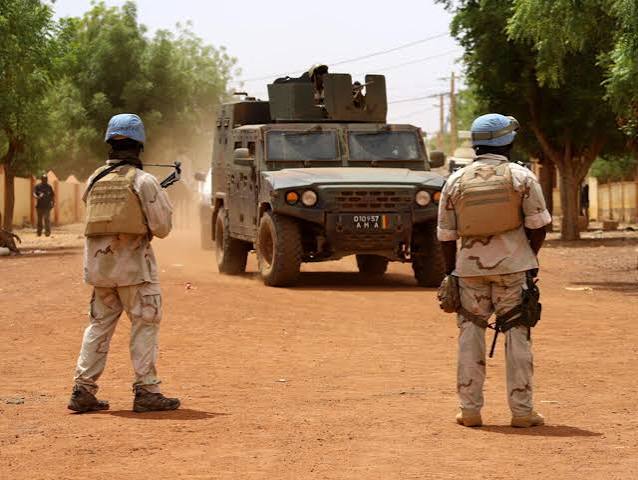

A massive security crisis has gripped the Sahel as suspected jihadists alongside Tuareg separatist fighters launched a devastating, highly coordinated offensive across Mali. The renewed campaign, which flared into open warfare on July 4, 2026, has targeted several strategic towns, vital military installations, and regional transport junctions, severely testing the defensive capabilities of the Malian Armed Forces (FAMa) and their international security partners.
This fresh wave of violence marks a dangerous revival of the expansive campaign that originally fractured the country’s security frameworks earlier this spring. Security analysts are warning that the operational convergence between Al-Qaeda-linked militants and northern ethno-separatist factions represents the most severe existential threat to the state since the 2012 rebellion.
Strategic Convergence: The JNIM and FLA Tactical Alliance
The sudden multi-region strikes spotlight an unprecedented level of operational synchronization between the Group for the Support of Islam and Muslims (JNIM)—a powerful Salafi-jihadist insurgency—and the Azawad Liberation Front (FLA), which represents Tuareg separatist factions. Though historically divided by stark ideological differences, the two groups have increasingly coordinated their actions to exploit the security vacuum left by shifting international alliances.
[JNIM (Al-Qaeda Affiliate)] ──► Exploiting Central/Southern Mali (Guerilla Operations & Sieges)
                                               ▲
                                               │ (Coordinated Anti-Junta Objectives)
                                               ▼
[FLA (Tuareg Separatists)]   ──► Dominating Northern Territority (Conventional Seizures & Autonomy)
The July 4 offensive has triggered heavy fighting across multiple sensitive zones, including the strategic northern outpost of Anefis and the southern town of Kenioroba. By striking simultaneously in both the hyper-volatile north and the previously secure southern corridors closer to the capital, the insurgent alliance has effectively forced government forces into a reactive, highly fragmented defensive posture.
Infrastructure Collapse and Geopolitical Fallout
The ongoing military crisis has completely upended Mali’s foreign policy and internal security architecture. Following the military junta’s previous decision to sever ties with traditional Western allies like France and expel the United Nations stabilization mission, the government has relied almost exclusively on Russian paramilitary support via the Africa Corps (formerly the Wagner Group).
However, the latest insurgent push has exposed severe gaps in this defensive arrangement. Rebel forces previously captured critical state military infrastructure, including mobile ground control stations for military drones. The relentless pressure has already forced retreats from several key northern strongholds, completely shifting the balance of territorial control.
[Rebel Strategic Control] ──► Kidal (FLA Controlled) │ Tessit (JNIM Controlled)
[Contested Urban Centers] ──► Gao, Mopti, and Sévaré (Active Insurgent Encirclement)
[Junta Command Hubs]     ──► Bamako (Capital) and Kati Military Base (Malian Control)
Security Matrix: Insurgent Capabilities vs. State Deterrence
| Insurgent & Separatist Capabilities | State & Africa Corps Countermeasures |
|---|---|
| Multi-Front Maneuvers: Coordinated assaults utilizing car bombs (VBIEDs) and kamikaze drones. | Asymmetric Airpower: Heavy reliance on Russian airstrikes and tactical helicopter deployment. |
| Tactical Acquisitions: Successful seizure of high-tech military hardware and drone bays. | Fortified Regimental Hubs: Concentrating remaining combat forces around Bamako and Kati. |
| Local Non-Aggression Pacts: Forcing rural districts into local compliance deals to bypass state rule. | Regional Defense Pacts: Attempting to build joint security counter-measures via the Alliance of Sahel States. |
“This offensive is no longer just a series of isolated extremist raids; it is a complex, structural contest for the survival of the Malian state,” warned an international security brief from the International Center for Counter-Terrorism (ICCT). “The convergence of separate political and religious insurgencies has stretched the junta’s forces far beyond their sustainable capacity.”
With humanitarian groups reporting sharp spikes in internal civilian displacement and severe disruptions to emergency food corridors, the United Nations has expressed deep alarm over the rapidly deteriorating human rights landscape. As the smoke clears from the latest round of fighting in Anefis, the Malian military faces the uphill battle of maintaining institutional integrity over a heavily fragmented national map.
About The Author