Historic Justice: War Crimes Trial of Former CAR President François Bozizé Opens in Bangui

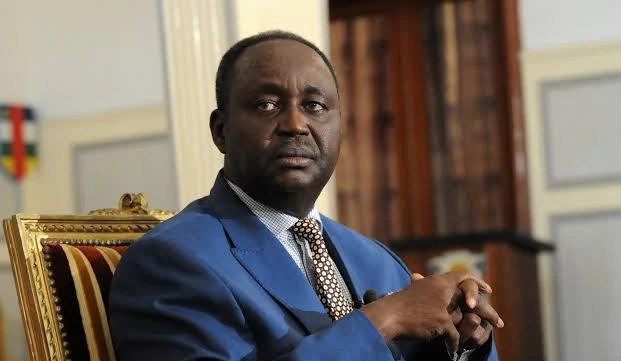
A landmark judicial reckoning has commenced in the Central African Republic (CAR) as a United Nations-backed tribunal formally opened proceedings against one of the country’s most prominent former rulers. The François Bozizé war crimes trial marks a watershed moment for accountability in sub-Saharan Africa, representing the highest-ranking political and military figure ever brought before the hybrid court to answer for systematic atrocities against civilian populations.
The trial is being conducted by the Special Criminal Court (SCC) in the capital city of Bangui. Established via statutory collaboration in 2015, the SCC is a unique hybrid jurisdiction staffed by a blend of domestic Central African and international jurists tasked with investigating grave human rights violations committed since 2003.
Because the principal defendant remains beyond the immediate physical reach of the court, the proceedings are moving forward under strict legal protocols governing trials in absentia.
Severe Charges: Systemic Atrocities in Bossembélé
The prosecution’s core brief spans a highly turbulent four-year period between 2009 and 2013, focusing specifically on operations managed by Bozizé’s elite protection units. Legal documents focus heavily on severe human rights abuses carried out at a civilian penitentiary and a nearby military training center located in Bossembélé, roughly 150 kilometers (90 miles) northwest of Bangui.
The Special Criminal Court issued an international arrest warrant for the 79-year-old former president after concluding there was substantial, mutually corroborative evidence establishing his hierarchical liability.
As the supreme military commander during the period in question, Bozizé is accused of directly authorizing or turning a blind eye to severe patterns of criminal conduct by his Presidential Guard, including:
- Widespread Murders: Extrajudicial executions of political dissidents, captured combatants, and suspected civilian sympathizers.
- Enforced Disappearances: The systematic abduction and unrecorded removal of individuals from public life.
- Severe Torture & Abuse: Hardened interrogation practices leading to permanent physical trauma or death.
- Sexual Violence: The calculated use of rape and other inhumane acts as mechanisms of structural terror.
While Bozizé’s defense attorney, Marie Edith Douzima-Lawson, declined to reveal the specifics of her legal strategy prior to entering formal pleadings, she assured the court that the defense holds robust arguments to counter the prosecution’s claims of command responsibility.
Co-Defendants in Custody and the Enforcement Gap
While the former president’s seat in the courtroom remains empty, the trial features the physical appearance of three of his former top-tier military officers. Unlike Bozizé, these co-defendants have been held in pre-trial detention facilities in the CAR and are facing direct cross-examination:
Co-Defendants Facing Immediate Prosecution
- Eugène Barret Ngaïkosset: Commonly referred to by local communities as the “Butcher of Paoua,” Ngaïkosset has long been a feared military enforcer within successive regimes.
- Vianney Semndiro: A senior tactical officer implicated in managing detention cells where torture was allegedly routine.
- Firmin Junior Danboy: A prominent guard commander tied directly to operational logistics at the Bossembélé facilities.
Despite the symbolic victory of bringing these military figures to court, civil rights groups emphasize that the SCC continues to grapple with an acute enforcement gap. According to monitoring briefs compiled by Amnesty International, more than 30 suspects wanted by the tribunal under sealed international warrants remain at large across regional borders.
From Coups to Exile: A Decadelong Cycle of Violence
François Bozizé’s political career mirrors the broader, volatile history of the Central African Republic. He originally seized executive power via a military coup in 2003, governing for a decade before being violently driven from office in 2013 by the Séléka—a loose coalition of predominantly Muslim rebel factions.
His ouster triggered a devastating, multi-year civil war as Christian and animist communities organized retaliatory militias known as the Anti-balaka. The ensuing sectarian conflict left thousands of civilians dead and displaced over a quarter of the population, transforming the mineral-rich nation into one of the economically poorest countries globally.
[2003 Coup d'État] ──> [Bozizé Rules CAR] ──> [2009-2013 Abuses] ──> [2013 Séléka Ouster] ──> [Exile & CPC Rebellion]
Bozizé eventually sought refuge abroad, moving between Chad and Guinea-Bissau, where he currently resides. In 2020, he made a dramatic re-entry into regional geopolitics by taking nominal control of the Coalition of Patriots for Change (CPC), an alliance of rebel factions that marched on Bangui to disrupt democratic elections.
The assault was ultimately repelled after President Faustin-Archange Touadéra deployed state forces backed heavily by private military paramilitaries from Russia’s Wagner Group. Guinea-Bissau authorities have consistently declined to execute the SCC’s international arrest warrant, citing diplomatic protections and constitutional limitations on extraditing political exiles.
For the victims of the Bossembélé atrocities, the opening of this trial represents a long-awaited path toward closure. Even if the principal architect does not physically serve jail time within the country, legal experts suggest that a formal, evidence-driven verdict will permanently strip away the historical culture of impunity that has fueled decades of armed rebellion in the region.
About The Author