
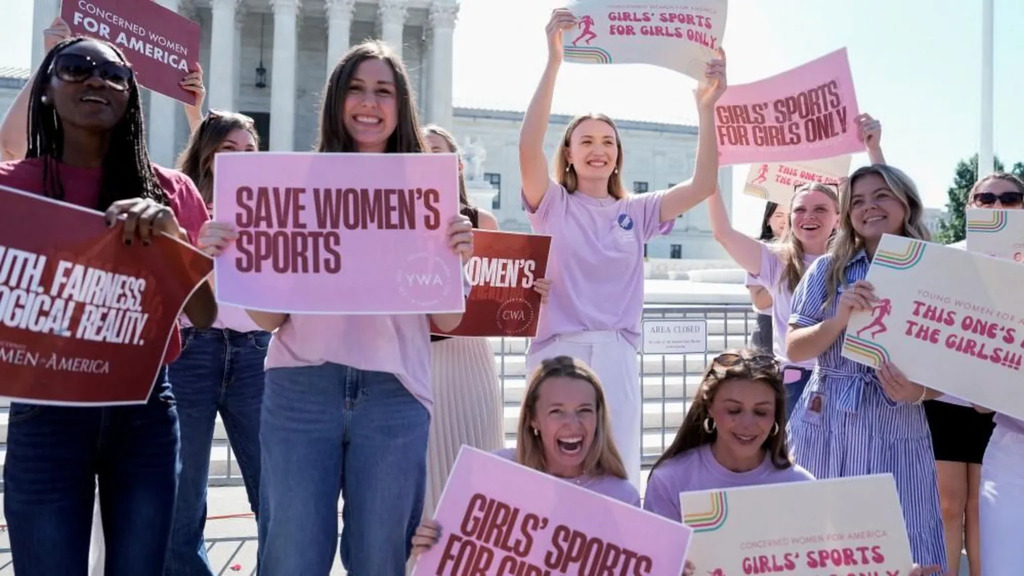
Judicial Precedent: US Supreme Court Upholds State Bans on Transgender Athletes in School Sports

In a monumental legal decision delivered on the final day of its term, the United States Supreme Court ruled that states have the constitutional authority to bar transgender girls and women from competing on female school athletic teams. The highly anticipated 6-3 decision marks one of the most significant rulings on LGBTQ+ civil rights in recent history, effectively validating restrictions already enacted across more than two dozen Republican-led states.
The high court overturned lower court decisions that had favored transgender student-athletes, concluding that public schools and universities can determine sports eligibility based strictly on “biological sex.” The ruling represents an extensive victory for social conservatives and will fundamentally reshape the landscape of K-12 and collegiate athletics across America.
The Legal Framework: Title IX and Equal Protection
The legal battle culminated from two consolidated cases: West Virginia v. B.P.J., involving 16-year-old middle school track runner Becky Pepper-Jackson, and Little v. Hecox, brought by Boise State University student Lindsay Hecox in Idaho. The plaintiffs argued that categorical bans violated the 14th Amendment’s Equal Protection Clause and Title IX, the landmark 1972 federal law prohibiting sex discrimination in education.
Writing for the conservative majority, Justice Brett Kavanaugh rejected those arguments, stating that separating sports teams by biological sex is constitutionally justified by the compelling interests of competitive fairness and physical safety.
[Equal Protection & Title IX Challenges] ──► Plaintiffs Argued Bans Constituted Illegal Sex Discrimination
                                                        │
                                                        ▼ (Supreme Court Majority Ruling)
[Biological Sex Classifications]        ──► Ruled Constitutionally Justified for Safety & Fairness
“May schools determine eligibility for women’s and girls’ sports based on biological sex? The answer is yes,” Justice Kavanaugh wrote in the majority opinion. “Consistent with Title IX and the Equal Protection Clause, we hold that the States may maintain women’s and girls’ sports for biological females… The Constitution and Title IX do not require an overhaul of women’s and girls’ sports throughout America.”
A Divided Bench: The Minority Dissent
The ruling split the court along familiar ideological lines, though elements of the judgment saw partial alignment. While the three liberal justices dissented firmly against the majority’s broader constitutional interpretations, they agreed in part with the technical assessment regarding Title IX’s statutory boundaries in the West Virginia case.
Justice Sonia Sotomayor, reading a passionate summary of her dissent from the bench, criticized the majority for rushing to a sweeping conclusion without sufficient scientific and evidentiary development regarding athletic advantages—particularly for youth who undergo early puberty-blocking treatments.
[Conservative Majority (6)] ──► State bans are presumptively constitutional to protect female sports.
                                      ▲
                                      │ (Ideological Divide)
                                      ▼
[Liberal Dissent (3)]       ──► Rushing to a broad conclusion marginalizes vulnerable students.
Key Takeaways of the Supreme Court Ruling
| Legal / Institutional Metric | Impact and Ruling Outcome |
|---|---|
| Scope of the Mandate | Permits states to ban transgender women from female sports; does not mandate a nationwide ban. |
| Existing State Laws | Securely greenlights restrictions in at least 27 states that already enforce biological sex limits. |
| Governing Athletic Bodies | Solidifies the positions of the NCAA and the US Olympic Committee, which limited female categories to sex assigned at birth. |
| Political Ramifications | Hailed as a “BIG WIN” by President Donald Trump, anchoring a major conservative policy goal. |
“The legislatures and the schools are better equipped — and under the Constitution, are the more appropriate entities — to assess the competing medical and scientific considerations and draw appropriate lines,” Justice Kavanaugh added, highlighting judicial restraint in complex scientific debates.
While human rights advocates and the American Civil Liberties Union (ACLU) expressed deep heartbreak over the ruling—stating that it denies transgender youth equal opportunities to thrive with their peers—proponents of the laws celebrated it as a defensive shield for the integrity of women’s athletics. The decision definitively settles the question of whether text-based protections for “sex” legally invalidate biological boundaries in sports, leaving further expansions or protections entirely in the hands of individual state legislatures.
About The Author