


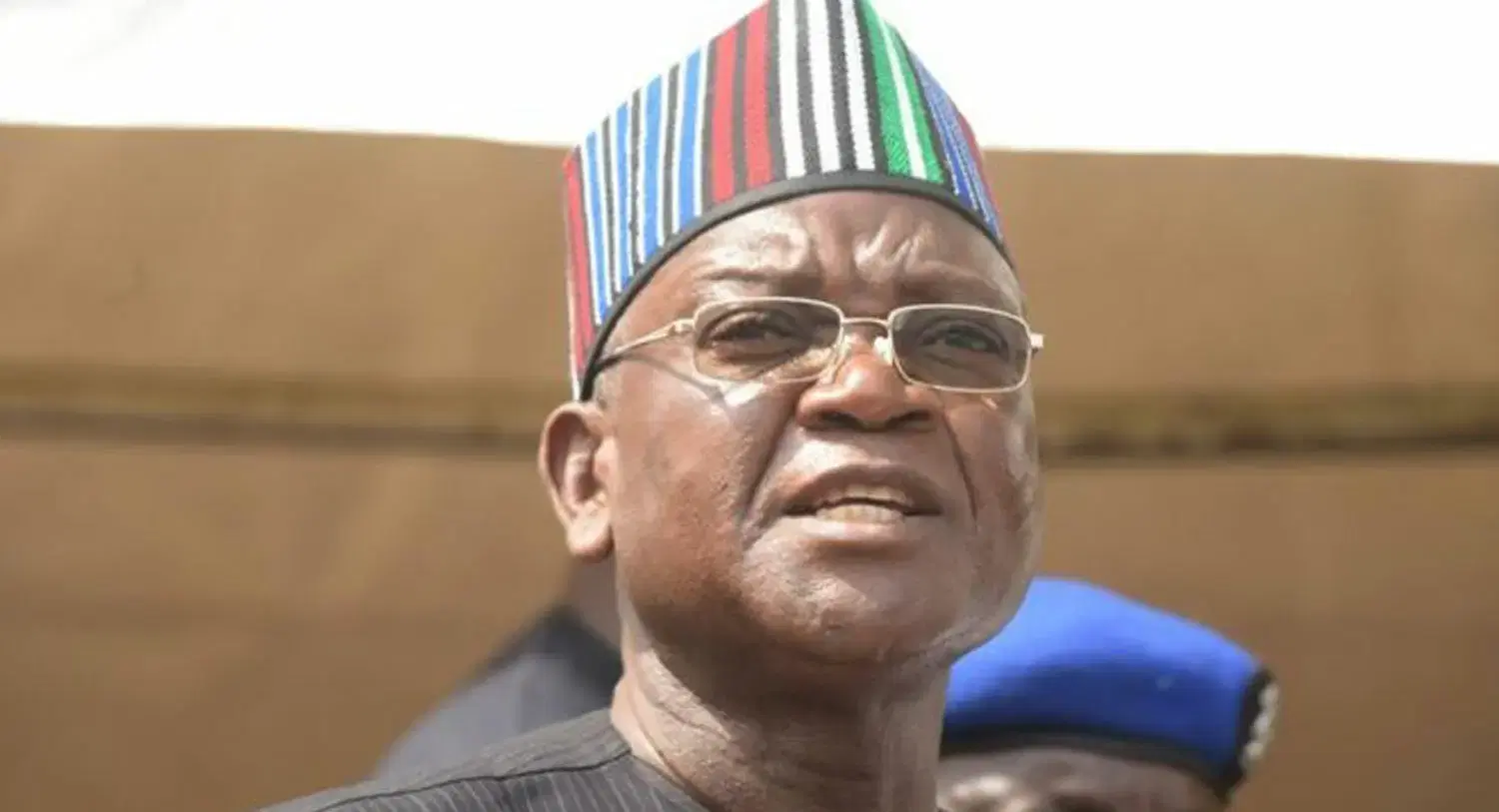
A high-stakes political confrontation has erupted in Benue State following the official submission of the report by the Benue State Income and Expenditure Commission of Inquiry. The judicial panel, set up by the administration of incumbent Governor Hyacinth Alia, dropped a political bombshell by alleging that a staggering N139.8 billion in public funds remains completely unaccounted for from the immediate past administration.
The reaction from the target of the probe was immediate. Former Governor Chief Samuel Ortom has fiercely rejected the commission’s findings, releasing a sweeping counter-statement that describes the entire panel as a “fundamentally flawed, legally challenged, and politically motivated witch-hunt.” The dispute marks a severe escalation in the ongoing institutional proxy war between the former governor’s camp and the current state executive.
The Billion-Naira Discrepancy: The Commission’s Findings
The eight-member panel, chaired by retired Justice Jubril Idrisu, was inaugurated by Governor Alia back in June 2025. Its explicit mandate was to run a forensic audit on the income, statutory allocations, and subsequent expenditures of the state government alongside its 23 local government councils across an eight-year timeline spanning May 29, 2015, to May 28, 2023.
[Total Revenue Generated (2015–2023): N826.5 Billion]
                         │
                         ├──► [Documented Expenditure: N683.4 Billion]
                         │
                         └──► [Unaccounted Balance: N139.8 Billion] ──► (Alia Demands Refund)
Presenting the document at the Government House in Makurdi, Justice Idrisu stated that the commission reviewed exhaustive financial records, verified bank balance sheets, and held months of public hearings. According to the panel’s balance scorecard, Benue State generated a total revenue of N826.5 billion during Ortom’s tenure, while verified expenditures stood at N683.4 billion, creating the disputed N139.8 billion financial gap. Receiving the report, Deputy Governor Sam Ode signaled the administration’s intention to fully implement the recommendations to discourage future mismanagement.
Ortom Strikes Back: “Legally Dead on Arrival”
Through a strongly worded brief issued by his Media Assistant, Zege Paul Terhide, Ortom hit back by arguing that the Alia administration is willfully disregarding the Nigerian judicial architecture to stage a media circus. The former governor revealed that the very legitimacy of the probe remains the subject of unresolved litigation, with a key appellate hearing scheduled at the Court of Appeal on June 29, 2026.
[Past Precedent: Ortom probed Suswam via Kpojime Panel]
                               │
                               ▼
[Current Dynamic: Alia probes Ortom via Idrisu Panel] ◄── Ortom flags ongoing litigation
Furthermore, Ortom accused Governor Alia of using the financial report as an administrative smokescreen to hide a lack of concrete performance. The former governor claimed that whenever the state government faces tough questions regarding the estimated N1.3 trillion that has accrued to Benue since 2023, it relies on historical deflection.
Core Arguments From Both Sides of the Benue Probe
| Operational Stance: Governor Alia’s Administration | Counter-Stance: Former Governor Samuel Ortom |
| Financial Discrepancy: Assers that an established gap of N139.8 billion must be accounted for or refunded. | Statutory Integrity: Maintains all records underwent annual statutory audits and regular legislative approvals. |
| Precedent Argument: Points out that Ortom himself set up the Justice Kpojime panel to investigate his predecessor, Gabriel Suswam. | Judicial Contempt: Points to an appeal scheduled for June 29, 2026, challenging the panel’s legality. |
| Good Governance: Frames the investigation as a non-negotiable pillar of transparency and accountability. | Diversionary Tactic: Frames the panel as a media distraction from current challenges like insecurity and IDP welfare. |
The Moral Ground and the Precedent Debate
The war of words has dragged historical consistency into the spotlight. Defending the inquiry, Governor Alia’s Chief Press Secretary, Sir Tersoo Kula, argued that Ortom lacks the moral ground to oppose the investigation. Kula pointed out that when Ortom assumed office in 2015, he swiftly set up the Justice Elizabeth Kpojime Commission of Inquiry to thoroughly probe the preceding administration of Gabriel Suswam.
“Having embraced the principle of probing a predecessor while in office, it is difficult to understand why the same principle has suddenly become objectionable when applied to his own administration,” Kula remarked. He added that rather than launching media campaigns, the former governor’s team should prepare to account for the funds. With the state government demanding a full refund and Ortom standing firm on his legal challenges, the unfolding saga is bound for a definitive showdown in the courts, shaping the state’s political landscape ahead of upcoming electoral cycles.
