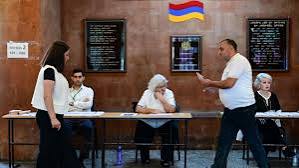

Armenians voted on Sunday in one of the country’s most consequential elections since gaining independence from the Soviet Union.
The parliamentary vote is widely viewed as a referendum on Prime Minister Nikol Pashinyan and his efforts to steer Armenia away from Russia’s orbit and toward closer cooperation with Europe and the West
The election comes after years of political upheaval, regional conflict, and growing tensions between Yerevan and Moscow. Since Armenia’s defeat in the 2023 Nagorno-Karabakh conflict with Azerbaijan, many Armenians have questioned Russia’s reliability as a security partner, prompting the government to pursue a more balanced foreign policy.
Pashinyan Seeks Fresh Mandate
Pashinyan’s ruling Civil Contract party entered the election as the frontrunner, with polls suggesting it could secure the largest share of votes. The prime minister has campaigned on promises of peace with Azerbaijan, democratic reforms, and stronger ties with the European Union and the United States.
He has framed the election as a choice between a future built on peace and modernization or a return to geopolitical dependence and instability. A strong victory could strengthen his position in ongoing negotiations with Azerbaijan and support efforts to deepen cooperation with Western partners.
Russia Looms Over the Vote
The election has unfolded amid accusations of Russian political pressure and influence campaigns.
Relations between Armenia and Russia have deteriorated significantly in recent years. Armenia has frozen participation in the Russia-led Collective Security Treaty Organization (CSTO) and expanded engagement with European institutions and Western governments. Moscow has repeatedly warned Armenia about moving too far from its traditional alliances.
Several opposition parties favor restoring closer relations with Russia and have criticized Pashinyan’s foreign policy direction. Among them is the Strong Armenia alliance, led by businessman Samvel Karapetyan, which has positioned itself as a defender of Armenia’s historic partnership with Moscow.
Election Marked by Tensions
The campaign was overshadowed by allegations of vote-buying, arrests of opposition figures, and claims of foreign interference. Armenian authorities detained several opposition candidates ahead of the vote, while government critics accused officials of attempting to weaken political rivals.
Despite the tensions, observers describe the election as a defining moment that could reshape the strategic balance in the South Caucasus region. European governments are closely monitoring the outcome, while Russia is watching for signs of further erosion of its influence.
Why This Matters
The result could determine:
– Armenia’s future relationship with Russia
– Prospects for peace with Azerbaijan
– Relations with the European Union and the United States
– Regional security in the South Caucasus
Prime Minister Nikol Pashinyan is seeking a fresh mandate amid growing geopolitical tensions.
Follow MyNewsHQ for updates.
About The Author